
Deux langues, vécues chaque jourTwo languages, lived every day
Two languages, lived every day.
Bilingualism is not a subject at LPG. It is the way the day is built. French and English appear in the songs, the stories, the meals, the playground, and the instructions the teacher gives without thinking.
- French50% of the school day
- English50% of the school day
- Mandarin2.5 hours per week, optional
French teachers and English teachers, co-planning every week.
Each class has a French teacher and an English teacher. They sit together on Friday afternoons to plan the week. They pick a shared theme, the seasons, the body, our neighbourhood, then choose what the French day will look like and what the English day will look like.
Children meet the same idea twice in the week, in each language, with each teacher. That repetition is what makes both languages settle in.
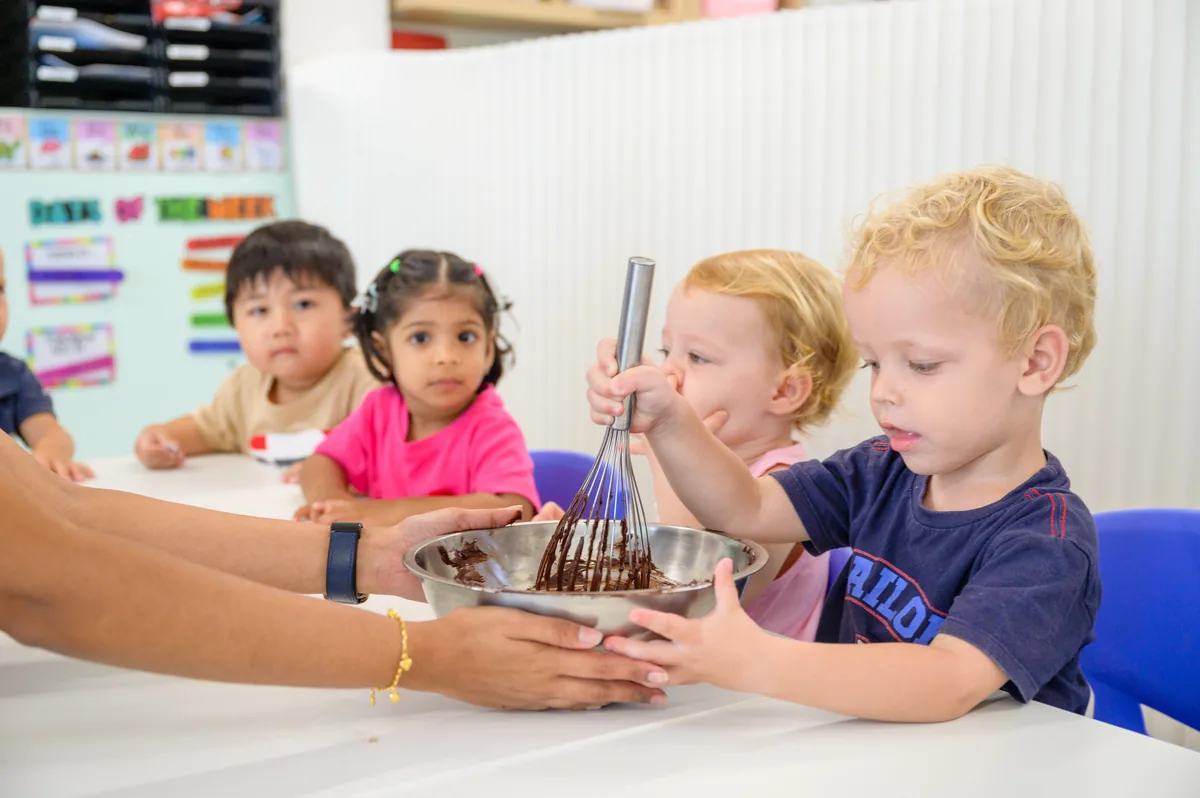
French at the door, English at the table, both in the playground.
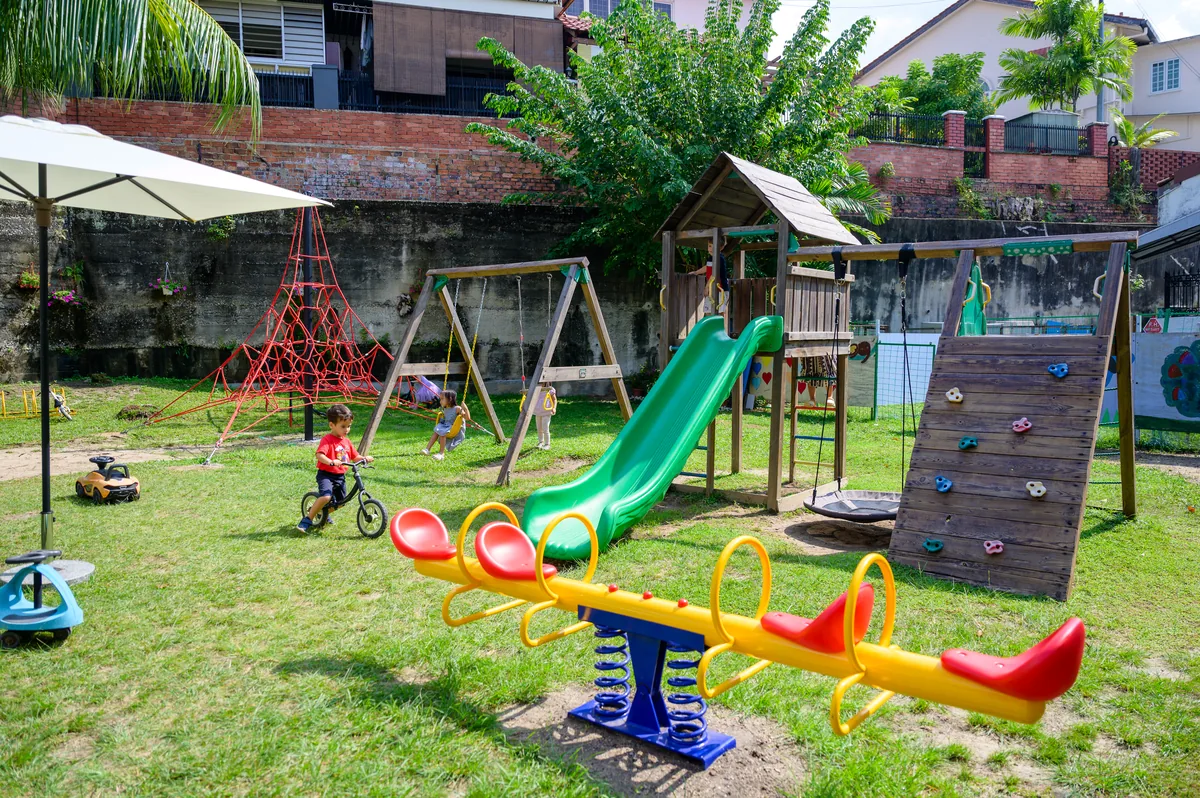
The morning greeting is in French. Workshop time alternates depending on the day. Recess belongs to whichever language the children want to use. Lunch is shared at the table, where both languages weave together. Story time at rest is often the other language.
We never compare the two languages in front of the children. They are simply part of how the day works, like break time and lunch.
Le chinois en optionMandarin, optional
For families who want to add a third language.
Mandarin is offered as an optional 2.5 hours per week, in three levels: beginner, intermediate, advanced. It is taught by Zhang Lao Shi, a native speaker. We see Mandarin as an addition to a bilingual core, not as a third pull on the day.
Children are introduced to the language through play, songs, and short stories. The aim at this age is exposure and a happy first relationship with Chinese sounds and characters.
A few honest answers about bilingual early years.
Will my child fall behind in either language?
In our experience, no. With small classes, daily exposure in both languages, and mother-tongue teachers in each, children grow into both languages at age-appropriate levels. They will sometimes mix words for a few weeks, this is a normal stage and passes quickly.
Does my child need to already speak French to join?
No. We welcome children with no French at all, from any home language. The younger the child, the easier the transition. Most non-French speaking children are settled and following along within a few weeks.
What if we plan to move to a French-curriculum school later?
Our programme aligns with the French maternelle and is recognised by the AEFE. Children leaving us for Lycée Français or any French school abroad usually transition without difficulty.
What about moving to a Singapore primary school?
Grande Section prepares children to enter Primary 1 with confidence in either language. We work with parents on the choice in the last year, and have prepared children for both local and international primary routes.
Is bilingualism stressful for a young child?
Not when it is built through routine. The risk is rushing or testing. We avoid both. Children speak when they are ready, and the school’s rhythm makes it easy to be ready.